When Should a Brand Hire an Omnichannel Commerce Consultant?
September 30, 2026
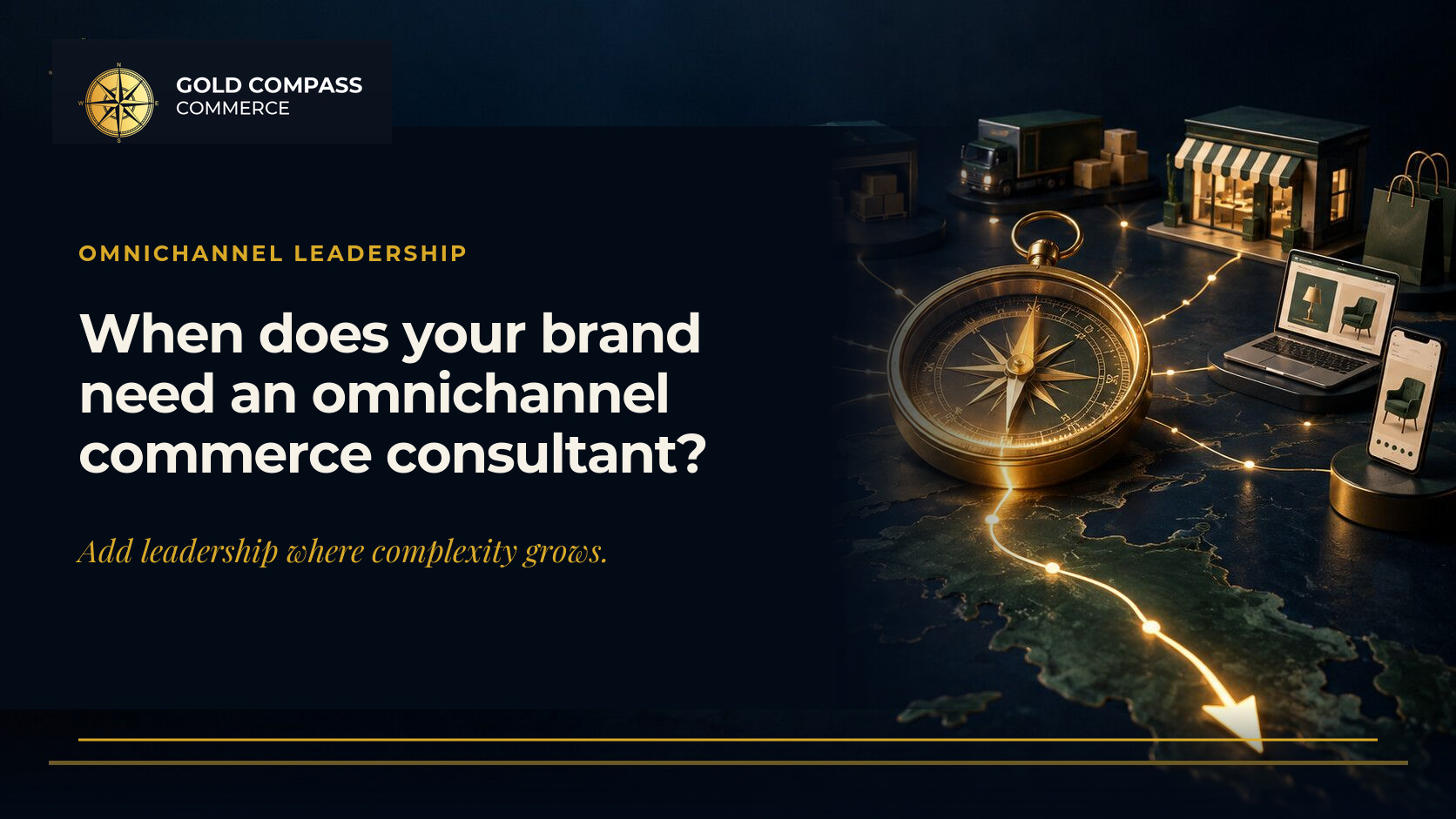
A brand should consider an omnichannel commerce consultant when growth is being constrained less by one channel tactic and more by misalignment across teams, economics, inventory, media, pricing, and customer experience. The consultant’s value is not simply another set of recommendations; it is an objective operating view and a practical path to coordinated decisions.
The clearest trigger: channels are optimized separately
If Amazon, Walmart, retail media, and DTC each have separate plans, dashboards, calendars, and incentives, local optimization can damage the total business. One channel discounts while another protects price. Media stimulates demand where inventory is constrained. DTC acquisition rises while marketplace branded search captures the conversion. A consultant can define channel roles and shared decision rules.
Other signs the business is ready
Common triggers include slowing growth despite rising spend; revenue gains with margin decline; recurring stockouts and excess inventory; unclear ownership between sales and marketing; inconsistent product information; channel conflict; a major marketplace launch; leadership turnover; acquisition or integration; preparation for a board plan; or a desire to build an internal commerce function.
What the consultant should diagnose
The work should examine commercial goals, channel economics, customer journeys, assortment, pricing, promotions, inventory flows, fulfillment, content, retail media, analytics, technology, team structure, partner roles, and decision cadence. The output should distinguish symptoms from root causes and rank initiatives by value, urgency, effort, and dependency.
Consulting is most useful at transition points
High-value moments include moving from founder-led to professional management, adding Walmart after Amazon, changing from Vendor Central to a hybrid model, expanding internationally, launching a major product portfolio, replacing an agency, integrating an acquired brand, or resetting an annual operating plan.
When not to hire a consultant
Do not hire a consultant merely to avoid making an internal decision, to validate a predetermined answer, or when leadership will not provide data and stakeholder access. If the need is a defined recurring task—such as daily campaign management—managed services may be the more direct solution.
What a useful engagement produces
A strong engagement creates a fact base, channel-role framework, economic model, prioritized roadmap, responsibility matrix, KPI tree, meeting cadence, and 90-day activation plan. Recommendations should reflect resource constraints and identify what to stop as clearly as what to start.
Choosing the consultant
Look for operating experience, financial fluency, ability to work across functions, and enough platform depth to understand execution. Ask for examples of recommendations that changed after discovery; this reveals whether the consultant diagnoses or simply applies a fixed playbook.
Frequently asked questions
How long should an engagement last?
A focused diagnostic may take several weeks; transformation support may continue through implementation. Scope should reflect complexity and stakeholder access.
Can the consultant also execute?
Some firms provide both consulting and managed services. This can accelerate implementation if advice remains objective and responsibilities are explicit.
Who should sponsor the work?
The sponsor should have authority across commerce functions—often a CEO, CMO, CRO, COO, or head of e-commerce—with finance and supply-chain participation.
How Gold Compass Commerce can help
Gold Compass helps brand leaders connect marketplace strategy with the operational and financial decisions that determine profitable omnichannel growth.