Watch Out for the Biggest Pitfall from a Successful Prime Day
June 5, 2026
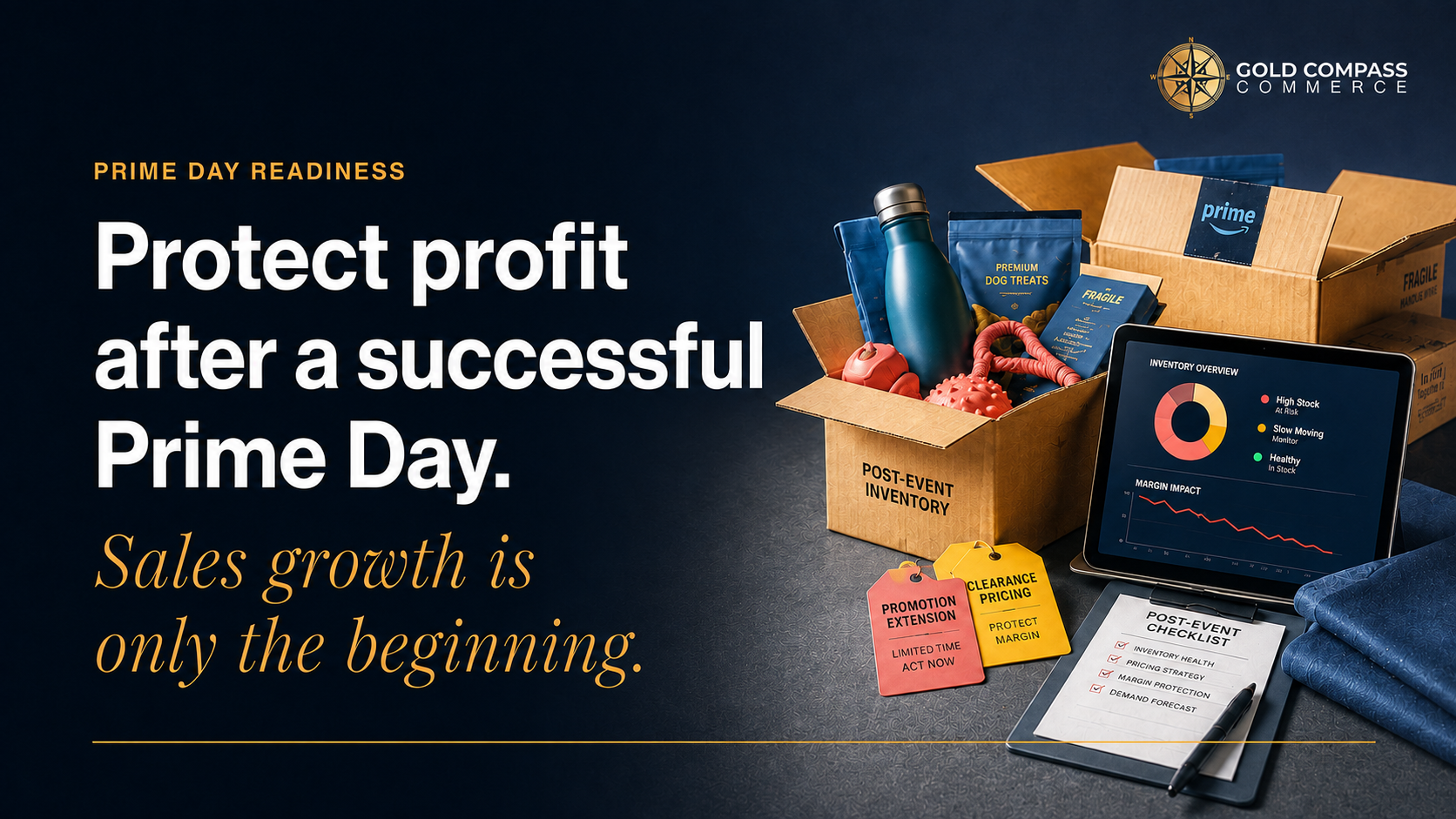
How Brands Should Prepare Now for Amazon Prime Days
Amazon Prime Days are coming up June 23–26, and for brands selling on Seller Central or Vendor Central, preparation has occurred, but a final review needs to happen now prior to implementation.
Prime Days can be a major growth opportunity, but success is not simply about turning up advertising spend during the event. Brands need to think holistically across deals, discounts, media, inventory, forecasting, and post-event demand. Without that alignment, it is easy to drive a short-term sales spike that creates longer-term operational problems.
Here are the key areas brands should be reviewing now to ensure success later this month and throughout the summer.
# 1. Confirm Deal Eligibility and Submission Deadlines
For products that are eligible, the deadline to submit Best Deals and Lightning Deals has been extended to Tuesday, June 9.
This creates an important last-minute opportunity for brands that may not have finalized their promotional strategy yet. However, eligibility varies, so brands should review their accounts carefully and confirm which ASINs qualify.
Prime Exclusive Discounts and Price Discounts can be entered up until the day before the event, depending on eligibility. These can be useful tools for brands that want flexibility closer to the event or need to adjust their promotional approach based on inventory, competitive activity, or margin considerations.
Promotional planning should be tied to your broader growth strategy, not treated as a standalone task.
# 2. Build a Marketing Spend Flow Before and During the Event
Prime Days performance is influenced by what happens before the event begins.
Brands should allocate targeted marketing spend in the lead-up to Prime Days to build momentum, increase visibility, and support consideration before shoppers are actively comparing deals. During the event itself, PPC advertising spend should be aligned with forecasted growth by parent product and leverage retargeting.
Not every product should receive the same level of investment. Some products may be strong traffic drivers, while others may offer better profitability, stronger inventory positions, or higher long-term customer value. Stop trying to make every SKU in your catalog a Hero on Amazon .
.
A strong Prime Days strategy connects advertising investment with business goals. That may mean driving rapid growth, improving profitability, defending market share, launching new products, or regaining category dominance.
# 3. Review Inventory at Amazon and in Your Pipeline
Inventory is the most important factor in Prime Days planning and success. You won’t sell something you don’t have available for quick-ship.
Brands should review inventory levels at Amazon fulfillment centers as well as inventory in the pipeline. This includes understanding what is available now, what is inbound, what is at domestic warehouses, and what is in manufacturing.
It is critical not to push harder than your stock levels can support for core inline products.
Going hard during Prime Days is a waste if you are out of stock all July.
An aggressive promotional and advertising strategy can create a strong sales lift, but if it results in stockouts, lost ranking, disrupted replenishment, and missed demand after the event, the long-term impact may not be worth it.
The best strategies balance demand generation with operational readiness.
# 4. Stop Working in Isolated Silos
Prime Days planning should not happen in separate silos.
Deals, advertising, inventory, forecasting, profitability, and catalog strategy all need to work together. When these functions are disconnected, brands often overspend, under-forecast, promote the wrong products, or miss opportunities to build sustainable momentum.
A successful Prime Days plan should answer questions like:
Which products are eligible for deals or discounts – and is it right to enroll?
Which products have enough inventory to support increased demand?
Which parent products should receive the highest media investment?
Where do we expect growth, and how much are we willing to spend to capture it?
How will this event impact July and the rest of the summer?
What is the goal: profitable revenue, rapid growth, market share, or category leadership?
The brands that succeed during major retail events are not only reacting to the event calendar. They are using these moments as part of a broader marketplace growth strategy.
# 5. Plan for the Full Summer, Not Just Prime Days
Prime Days can create a surge in demand, but the impact does not end when the event is over.
Brands should think beyond the four-day event and plan for the full summer. That includes inventory continuity, post-event advertising strategy, pricing adjustments, review of promotional performance, and ongoing optimization.
The goal is not just to have a strong Prime Days. The goal is to use Prime Days to strengthen your marketplace position.
Ready to Shape a Cohesive E-commerce Strategy?
If you want to stop working in isolated silos and start growing sustainably, Gold Compass Commerce is the firm for you.
Gold Compass partners with brands to develop marketplace strategies that align advertising, operations, merchandising, and profitability. Whether your goal is profitable revenue, rapid growth, or regaining market dominance, we can help you build a plan designed to support long-term success.
Reach out to Gold Compass Commerce to discuss how your brand can prepare for Prime Days and beyond.