How to Align Apparel Advertising With Size and Color Inventory
September 22, 2026
Apparel advertising should respond to sellable assortment depth, not parent-level inventory. A campaign can generate traffic while the sizes and colors most shoppers want are unavailable, producing weak conversion, wasted spend, and a disappointing brand experience.
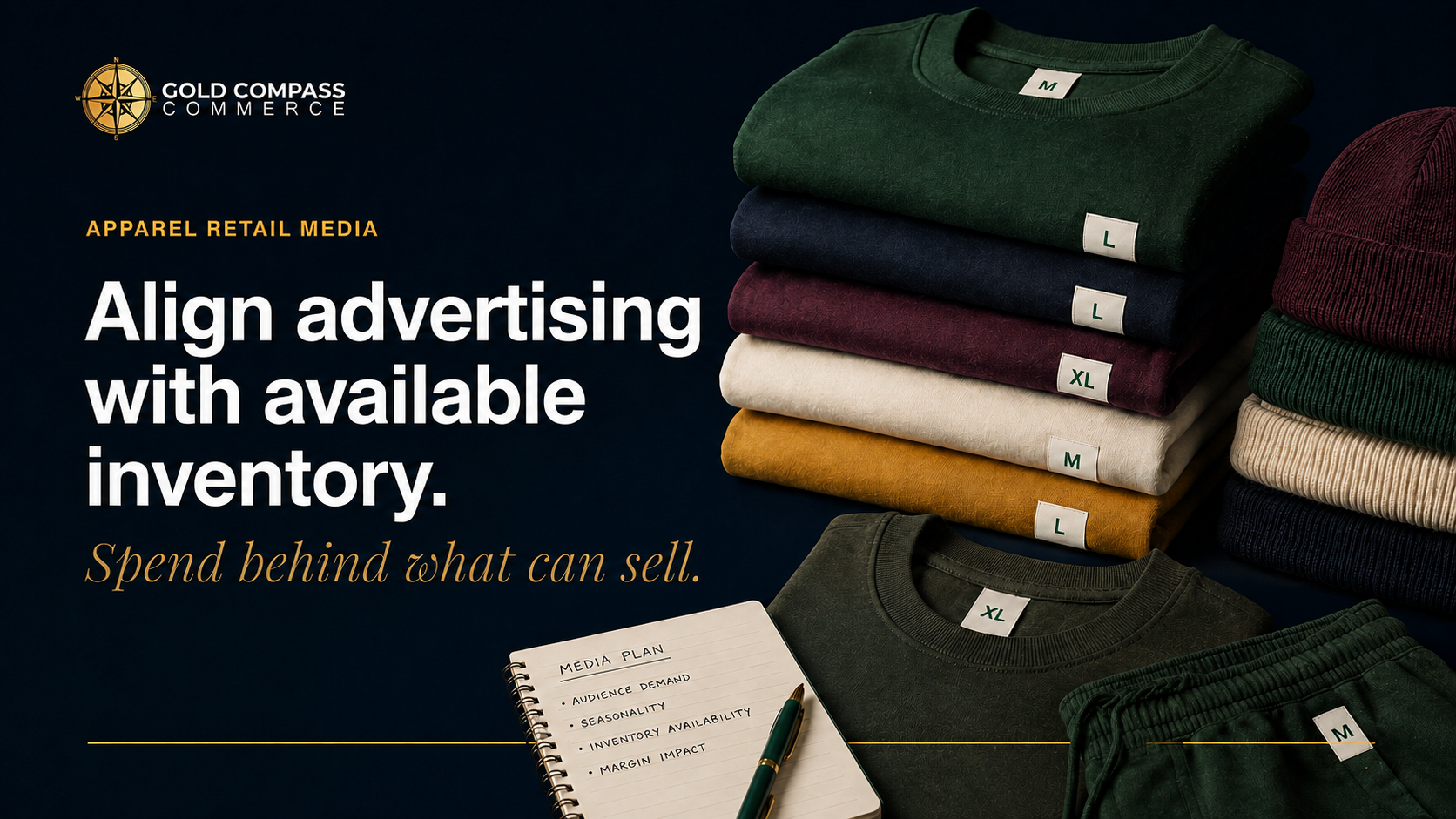
The solution is a feedback loop between child-ASIN inventory, media, merchandising, and margin.
For medium-to-enterprise brands, that loop must cross functions. The CMO and VP of Brand protect demand and customer experience, the CFO evaluates return-adjusted contribution, the CRO and Head of Ecommerce set growth priorities, and media, merchandising, operations, and supply-chain leaders translate those priorities into child-level budget decisions.
Create a variant availability score
For each parent, weight available children by expected demand rather than simply counting them. If eight of ten sizes are in stock but the two missing sizes represent half of demand, the family is not 80% healthy.
Include:
- Demand-weighted size coverage
- Demand-weighted color coverage
- Weeks of cover by child
- Inbound confidence and timing
- Delivery promise
- Child conversion and return rate
- Contribution margin
Set green, yellow, and red thresholds for media eligibility.
Match campaign structure to merchandising reality
Separate evergreen hero styles, seasonal fashion, clearance, brand defense, nonbrand acquisition, and launch learning. This gives teams room to change spend without disrupting every objective.
When a featured child becomes constrained, decide whether to redirect to another credible variant, reduce bids, narrow targeting, or pause. Do not automatically move traffic to a poor-selling color simply because it is available.
Protect the landing experience
Confirm that the advertised child has accurate imagery, price, size, color, and inventory. If a creative asset features a specific color, shoppers should be able to find it easily. Avoid campaign promises that the available assortment cannot fulfill.
Sponsored Products eligibility and delivery depend on product status and availability. Regardless of ad type, inventory-aware planning improves the probability that paid attention can convert.
Use forecast signals, not only current stock
Current availability is a lagging view. Combine sell-through, inbound shipments, lead times, promotion plans, and season end dates. A product with seven days of stock and a six-week replenishment lead time should be managed differently from one with replenishment arriving tomorrow.
During launches, use controlled media to learn demand by child without letting early spend deplete a narrow size curve.
Include returns and markdown risk
Some variants convert well but produce poor kept-order economics. Others face end-of-season markdown exposure. Media allocation should consider return-adjusted contribution and the value of selling inventory now versus later.
This is where CFO and merchandising input changes the strategy. A lower-ROAS campaign may be economically rational if it moves stranded but profitable inventory; a high-ROAS campaign may be destructive if it causes an unrecoverable stockout in a hero size.
Automate carefully
Teams can use inventory feeds, retail analytics, campaign rules, and internal dashboards to accelerate decisions. But automation needs safeguards for data latency, sudden catalog issues, and false availability. Start with recommendations and human approval, then automate narrow, reversible actions once the signals are reliable.
Build an executive scorecard
Review demand-weighted variant coverage, paid traffic to constrained families, contribution after media and returns, stockout days, stranded inventory, seasonal sell-through, child-level conversion, and budget shifted due to inventory signals.
FAQs
Should ads stop when one popular size is unavailable?
Not always. The decision depends on demand concentration, remaining variant value, replenishment timing, and campaign objective.
Can parent-level ROAS be trusted?
It can be useful, but it may conceal child-level availability, margin, and return differences.
What is the first practical step?
Build a demand-weighted variant-availability score for the top revenue-driving families and use it in weekly media decisions.
How Gold Compass Commerce can help
Gold Compass Commerce helps apparel brands connect catalog, child-level inventory, retail media, and profitability so advertising supports the assortment customers can actually buy.